Simpler Recycling: what's actually changing
You might have heard about Simpler Recycling. It's been in the background of council communications for a couple of years now, sandwiched between leaflets about garden waste subscriptions and reminders to flatten your cardboard. The name makes it sound like everything is about to get easier. The reality is more mixed.
Here is what Simpler Recycling actually is, what it requires, who it affects, and how many councils have actually hit their deadlines.
What it is
Simpler Recycling is a reform under the Environment Act 2021, implemented by DEFRA (the Department for Environment, Food and Rural Affairs). The aim is to end what everyone calls the "postcode lottery" of recycling: the situation where neighbouring councils accept completely different materials, use different bin colours, and have different rules for the same items.
Before Simpler Recycling, there was no legal requirement for councils to collect specific materials. Some offered food waste collection. Many didn't. Some accepted Tetra Paks. Most didn't. Glass collection varied enormously. The inconsistency is not councils being difficult; it's that nobody told them they had to be consistent.
Simpler Recycling tells them.
The four mandatory waste streams
From 31 March 2026, all local authorities in England must separately collect these four streams from households:
- Residual waste — non-recyclable general rubbish. Your black bin, basically.
- Food waste — collected weekly, free of charge, using a kitchen caddy plus larger outdoor caddy. This is the big change for many households.
- Paper and cardboard — can be collected separately or combined with other dry recyclables if the council provides written justification to DEFRA.
- Dry recyclables — glass, metal (tins, cans, foil), plastic (bottles, tubs, trays, pots), and cartons (Tetra Paks). These can be co-mingled in one bin.
The key word is "separately." Councils must provide distinct collection for food waste. They can't just tell residents to chuck apple cores in the garden bin.
Key dates
| Date | What happens |
|---|---|
| 31 March 2025 | Businesses and non-domestic premises must comply (already passed) |
| 31 March 2026 | Households: councils must collect all four streams including weekly food waste |
| 31 March 2027 | Plastic film and bags added to kerbside recycling; micro-businesses (<10 employees) must comply |
What you'll actually notice at home
If your council already collected food waste separately, you might not notice much at all. Roughly 52% of councils already had some form of food waste collection before the mandate.
If your council didn't, expect:
A new food waste caddy. Small kitchen caddy for inside, larger one for outside. Lined with compostable bags or newspaper. Collected weekly regardless of which bin week it is.
You might also see a new or relabelled bin for paper and card if your council previously mixed it in with everything else. Some councils are taking the opportunity to reconfigure their entire bin lineup.
Tetra Paks and cartons are now included in the standard recyclable materials list. If your council previously rejected them, they should now accept them. Rinse and flatten them first.
One thing that is explicitly not required yet: plastic film. Bread bags, crisp packets, cling film, salad bags. These stay out of kerbside recycling until March 2027. Keep taking them to supermarket collection points.
What's not covered
Simpler Recycling does not require councils to collect:
- Non-packaging glass (drinking glasses, Pyrex, light bulbs)
- Polystyrene or PVC
- Compostable or biodegradable-labelled items (these contaminate recycling)
- Nappies and absorbent hygiene products
- Bulky plastics (garden furniture, storage boxes)
- Contaminated metal packaging
These all go in general waste or to your local Household Waste Recycling Centre.
79 councils missed the deadline
At least 79 councils told the BBC they would not meet the deadline for weekly food waste collection.
Here's the honest bit. The 31 March 2026 deadline has passed, and not everyone made it.
At least 79 councils told the BBC they would not meet the deadline for weekly food waste collection. Of those, 57 aim to comply by the end of 2026. Thirty-one have formal transitional agreements with DEFRA, which is a polite way of saying they got permission to be late.
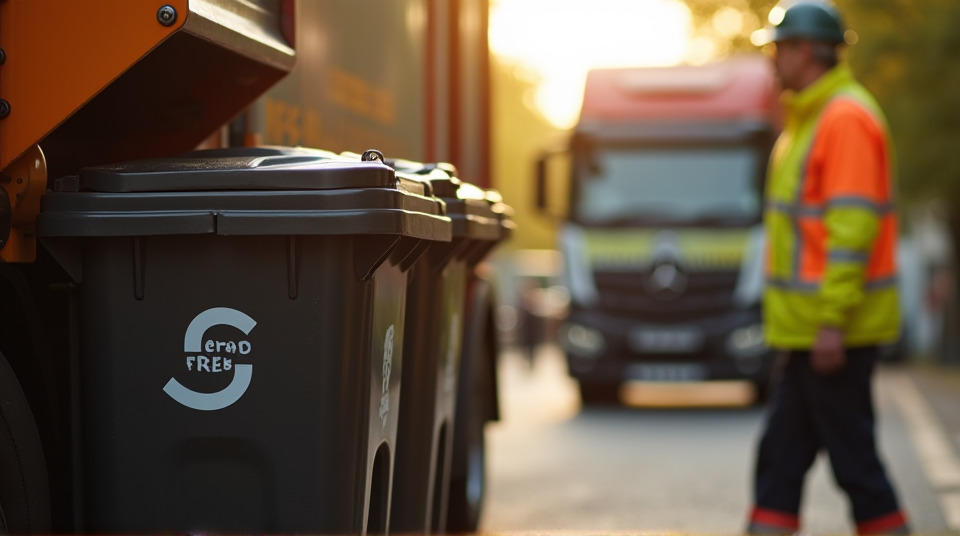
The main barrier is logistics. Food waste collection needs specialist vehicles (smaller, more frequent rounds) and millions of caddies procured and distributed to every household. Supply chains for both have been strained. A letsrecycle.com analysis from early 2026 found 86% of councils were "on track," which sounds good until you do the maths and realise that leaves over 50 authorities that weren't.
This is not unusual for waste policy in the UK. The 2003 Household Waste Recycling Act gave councils until 2010 to offer separate collection of at least two recyclable materials, and some only scraped in at the last minute. Large-scale infrastructure changes take time, and funding doesn't always arrive when the legislation says it should.
If your council hasn't started food waste collection yet, check their website for a rollout timeline. Some are phasing in by ward. Others are waiting for vehicles and will switch on the whole area at once. DEFRA's transitional agreements aren't publicly listed, so there is no central place to look up which councils have exemptions. You have to check locally.
Does it standardise bin colours?
No. This is a common misunderstanding. Simpler Recycling standardises which materials must be collected. It says nothing about the physical colour of the bins used to collect them. Councils retain full authority over their bin colours, procurement contracts, and collection infrastructure.
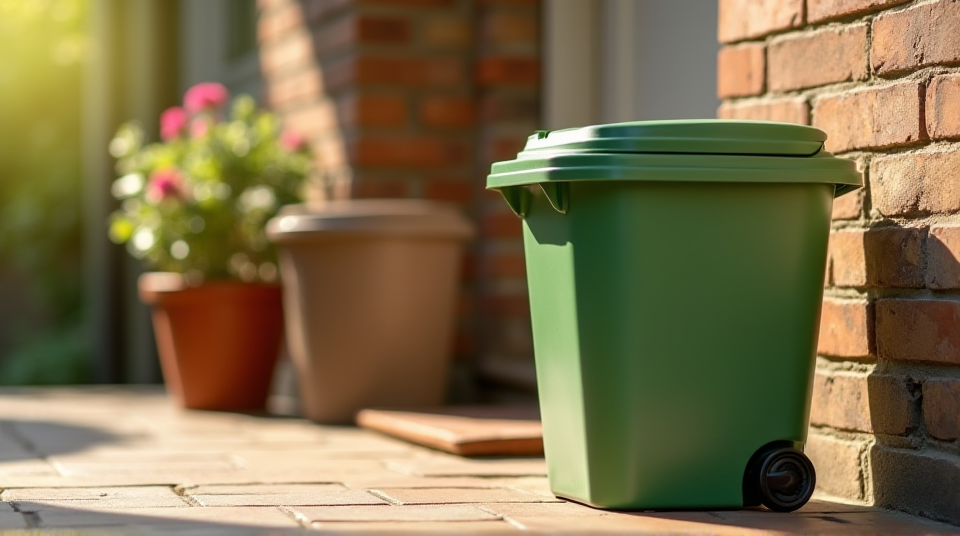
Green will continue to mean three different things depending on where you live. Blue will stay mostly consistent (dry recycling in most of England), but there are no guarantees. The colour chaos persists.
England only
Simpler Recycling applies to England only. Scotland, Wales and Northern Ireland have their own waste legislation and recycling frameworks.
Wales is actually ahead of England on this. They've had a standardised approach for years and consistently lead UK recycling rates. Scotland has its own Household Recycling Charter. Northern Ireland has separate legislation under the DAERA (Department of Agriculture, Environment and Rural Affairs).
If you live in Scotland, Wales or Northern Ireland, Simpler Recycling doesn't directly affect your household. Your council's existing rules still apply.
That said, if you move between nations, don't assume the rules travel with you. A household in Cardiff follows Welsh rules. A household in Bristol follows Simpler Recycling. The bin colours, collection frequencies and accepted materials may all be different, even for towns a few miles apart either side of the border.
What this means for Binformation
As councils roll out new bins, change collection frequencies, or add food waste rounds, their published schedules update. Binformation pulls from those published schedules daily. When your council adds a new food waste caddy collection, it should appear in the app automatically once the council's data reflects it.
The transition period means some councils will be updating their schedules more frequently than usual over 2026. Binformation handles that through daily refresh. You might open the app one week and see a new "Food waste" line appear. That's Simpler Recycling arriving at your doorstep.
 Get Binformation — Free on Google Play